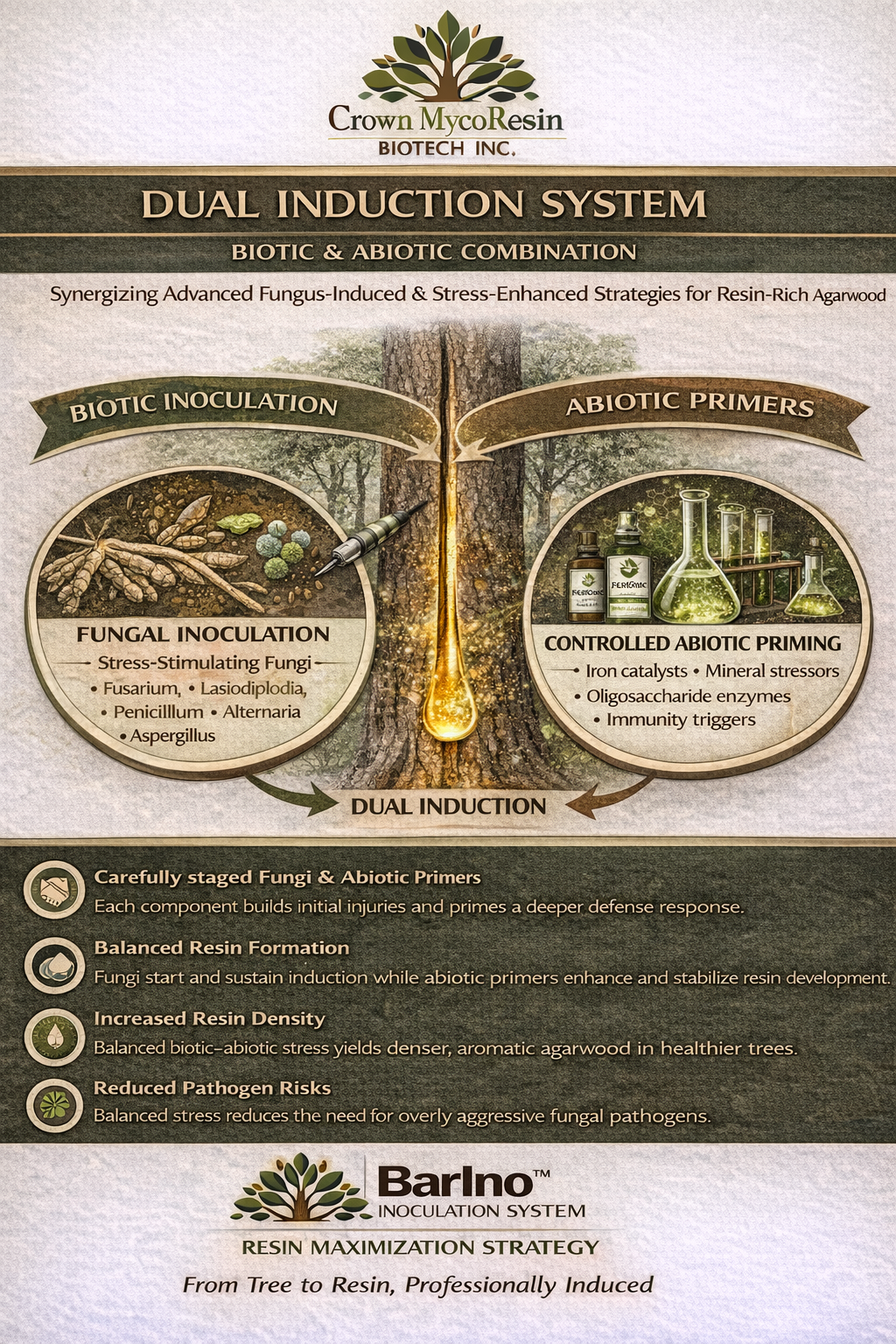
Here’s a detailed, research-ready explanation of the Dual Induction (Biotic + Abiotic) Method for agarwood (Aquilariaspp.), including principles, step-by-step procedure, and rationale. This can serve as the core methodology for an undergraduate, master’s, or PhD thesis.
1. Concept and Rationale
Dual induction combines biotic and abiotic triggers to simulate natural stress responses in Aquilaria trees. The goal is to accelerate resin (agarwood) formation and improve resin chemical quality.
- Biotic induction: Involves inoculation with fungi or bacteria (e.g., Fusarium oxysporum, Lasiodiplodia theobromae) that activate the tree’s defense mechanisms.
- Abiotic induction: Involves mechanical wounding or chemical elicitors (e.g., jasmonic acid, salicylic acid, ethylene) that also trigger defense responses.
Synergy: By combining the two, the tree perceives a stronger stress signal, enhancing secondary metabolite biosynthesis (sesquiterpenes, chromones) and resin deposition.
2. Materials and Equipment
- 2.1 Plant Material
- Aquilaria malaccensis, 2–5 years old (healthy plantation trees).
- 2.2 Biotic Induction
- Fungal inoculants: Fusarium oxysporum, Lasiodiplodia theobromae, or proprietary strains (e.g., BarIno™).
- Inoculum carriers: agar blocks, liquid culture, or spores in sterile water.
- 2.3 Abiotic Induction
- Mechanical wounding tools: drill, chisel, hammer, or cork borer.
- Optional chemical elicitors: jasmonic acid (JA), salicylic acid (SA), hydrogen peroxide, or ethylene gas.
- 2.4 Additional Materials
- Sterile gloves, alcohol, and disinfectants.
- Plastic tubes or inoculation syringes.
- Labels, markers, and data sheets.
3. Step-by-Step Procedure
- Step 1: Tree Selection and Preparation
- Select healthy, mature trees (2–5 years old).
- Mark treatment points at breast height (1–1.5 m).
- Disinfect the bark surface with 70% ethanol to prevent contamination.
- Step 2: Abiotic Induction (Mechanical or Chemical Stress)
- Drill holes or make shallow cuts (2–5 mm diameter, 3–5 cm deep).
- If using chemical elicitors:
- Apply jasmonic acid or salicylic acid solution into the wound using a syringe.
- Seal wound with sterile cotton or parafilm to reduce evaporation and contamination.
Rationale: Wounding stimulates the tree’s oxidative stress response, activating defense-related genes and secondary metabolite pathways.
- Step 3: Biotic Induction (Fungal Inoculation)
- Prepare fungal inoculum (solid agar block or spore suspension).
- Insert inoculum into the drilled hole or wounded site.
- Seal the site with sterile cotton, parafilm, or tree wound sealant.
Rationale: The fungus interacts with tree tissue, enhancing defense mechanisms and stimulating resin deposition.
- Step 4: Dual Induction
- Apply both abiotic and biotic treatments at the same site, either simultaneously or staggered (depending on protocol optimization).
- Record treatment details: tree ID, inoculum type, wounding size, date of induction.
Synergistic Effect: Abiotic stress “primes” the tree, making it more responsive to fungal attack, which can increase resin quantity and chemical diversity.
- Step 5: Monitoring and Maintenance
- Monitor the tree monthly for:
- Resin secretion
- Infection signs
- Leaf discoloration or stress symptoms
- Maintain environmental records: temperature, humidity, rainfall.
- Harvest resin 6–12 months post-induction (depending on site and tree age).
- Step 6: Resin Collection and Analysis
- Harvest resin using sterile tools.
- Measure weight (g/tree) for yield assessment.
- Analyze chemical composition (sesquiterpenes, chromones) using GC-MS or HPLC.
- Record tree health and survival rates to evaluate treatment impact.
4. Best Practices and Considerations
| Aspect | Recommendation |
|---|---|
| Tree Health | Avoid excessive wounding; limit to 2–3 induction points per tree per year. |
| Fungal Safety | Use non-pathogenic, controlled strains; avoid environmental contamination. |
| Chemical Elicitors | Follow safe concentration ranges; high doses may damage tissues. |
| Season/Climate | Apply during dry season to minimize fungal washout; monitor environmental conditions. |
| Documentation | Label each tree; record induction method, date, and wound location. |
5. Advantages of Dual Induction
- Accelerates resin formation compared to single methods.
- Enhances chemical diversity, improving fragrance quality.
- Can be standardized for commercial plantations.
- Environmentally friendly compared to chemical-only methods.
6. Limitations
- Requires careful handling of fungal inoculants and chemicals.
- Over-wounding can reduce tree survival.
- Multi-year monitoring is needed for optimal resin yield.
- Site-specific adaptation may be necessary due to climate and soil differences.