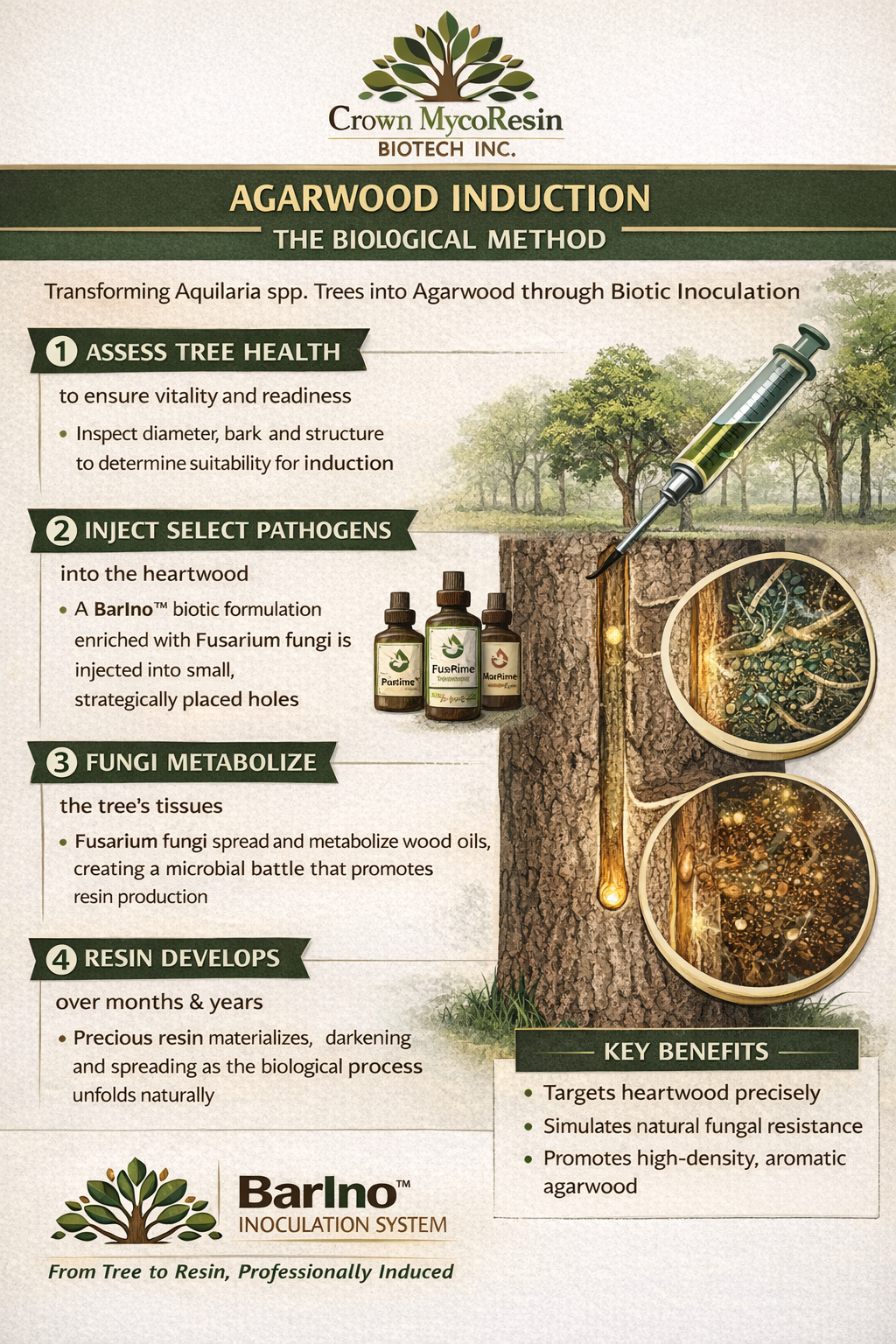
Definition:
Biological induction is the process of stimulating agarwood resin formation in Aquilaria trees using living organisms, typically fungi or bacteria, to mimic natural infection or stress. This method is eco-friendly and aims to accelerate resin production without harmful chemicals.
1. Mechanism of Biotic Induction
- Wounding or inoculation triggers tree defense responses.
- Microbial infection (fungi or bacteria) stimulates the tree to produce secondary metabolites (sesquiterpenes, chromones) as a defense mechanism.
- Over time, these metabolites accumulate in the heartwood, forming the characteristic resinous agarwood.
Key Points:
- Fungi secrete enzymes and metabolites that interact with Aquilaria xylem tissues.
- The tree’s immune response activates the terpene biosynthesis pathway (MVA and MEP pathways).
- Resin formation is localized around the inoculation site but can spread into surrounding wood with time.
2. Common Fungal Strains Used
| Fungal Genus | Notes / Use |
|---|---|
| Fusarium | Fast-growing; effective in resin induction; widely used in systems like BarIno™ FusaTrinity™ |
| Lasiodiplodia | Produces high sesquiterpene accumulation; synergistic in consortia |
| Aspergillus | Induces chromone-rich resin; often combined with Fusarium |
| Trichoderma / Penicillium | Used in experimental consortia; can improve tree health during induction |
3. Inoculation Techniques
1. Drilling + Fungal Paste
- Drill small holes into the trunk or branches.
- Apply fungal paste (mycelium + nutrient medium) into holes.
- Advantages: Simple, low-cost.
- Limitations: Slower resin formation.
2. Trunk Injection
- Inject fungal spore suspension directly into xylem using syringe or injection system.
- Advantages: Faster, deeper penetration, controlled inoculum dose.
- Limitations: Equipment needed, careful dosing required.
3. Surface Application / Wound Paste
- Apply fungal spores to shallow wounds on the trunk surface.
- Advantages: Minimally invasive, suitable for young trees.
- Limitations: Limited penetration; slower resin formation.
4. Multi-Strain Sequential Inoculation
- Involves applying different fungal strains in sequence to synergistically enhance resin production.
- Example: BarIno™ Sequential or FusaTrinity™ protocol.
- Benefits: Higher chemical complexity and yield.
4. Process Workflow
- Tree Selection: Healthy Aquilaria trees (3–8 years old) are chosen.
- Wound Preparation: Drill or create surface wounds at selected height.
- Fungal Inoculum Preparation: Grow fungal strains on PDA or nutrient media until actively growing mycelium/spores are ready.
- Inoculation: Apply fungi into wounds or inject directly.
- Monitoring: Track resin formation monthly; check for fungal colonization, tree health, and wound healing.
- Harvesting: Resinous wood can be harvested after 6–24 months depending on strain, inoculation method, and tree age.
5. Advantages
- Environmentally friendly compared to chemical induction.
- Mimics natural resin formation pathways.
- Can produce high-quality, aromatic resin suitable for luxury perfumery.
- Supports sustainable and ethical agarwood production.
6. Key Considerations
- Tree Health: Avoid over-inoculation; maintain proper tree care.
- Fungal Strain Selection: Choose strains compatible with tree age, local conditions, and desired resin profile.
- Inoculation Timing: Dry season inoculation often preferred to reduce secondary infections.
- Monitoring & Traceability: Document inoculation, resin yield, and chemical profile for quality assurance.
- Environmental Safety: Ensure fungal strains are non-pathogenic to surrounding vegetation.
Summary:
Biological induction is the most sustainable artificial agarwood method, leveraging fungi to stimulate the tree’s natural defense and resin production. Success depends on careful selection of fungal strains, inoculation techniques, and tree management practices.