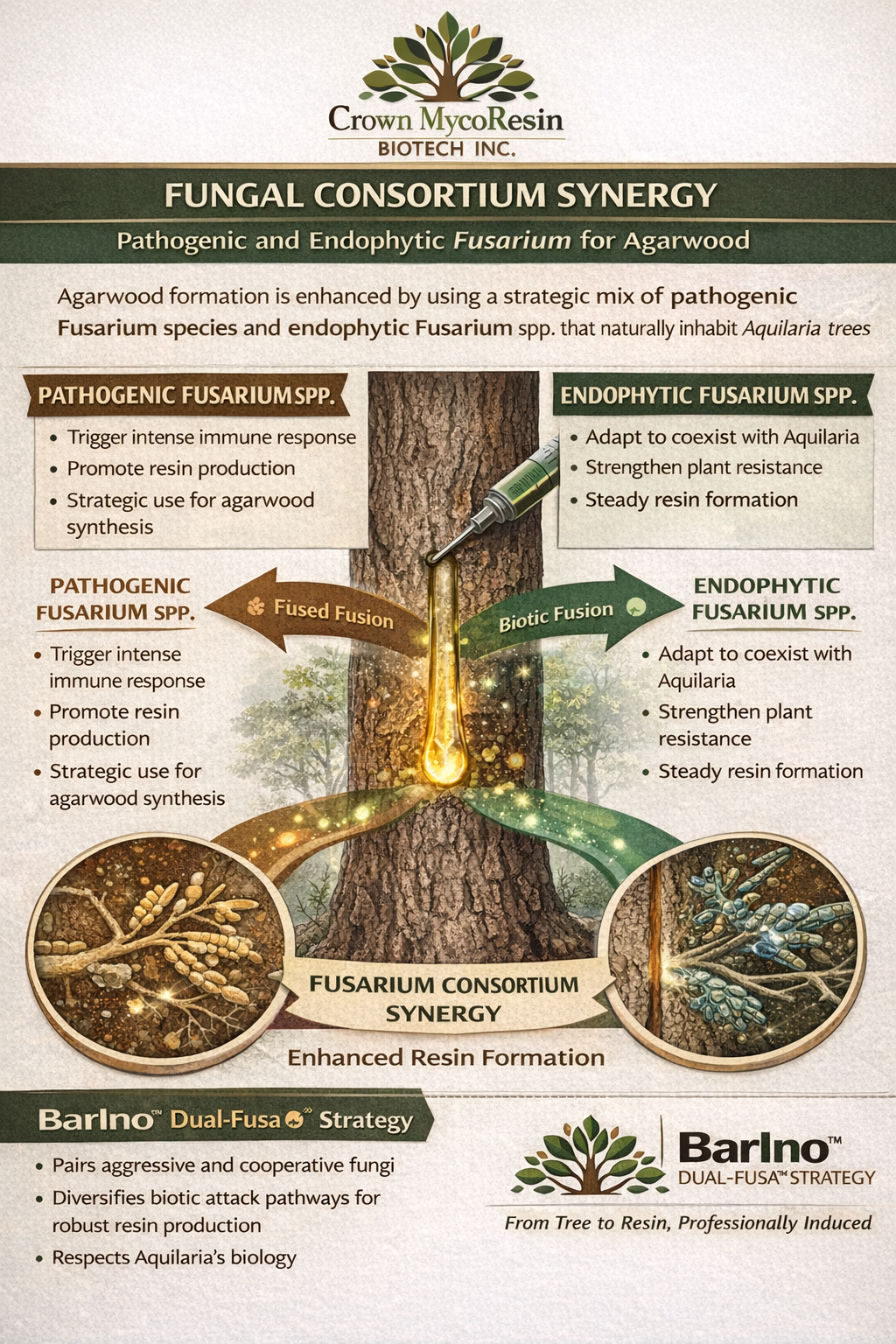
Here’s a detailed, step-by-step Fungal Consortium Induction Method specifically for agarwood (Aquilaria spp.) resin production. I’ve structured it so it can be used in undergraduate, master’s, or PhD-level research, and it’s aligned with BarIno™ FusaTrinity™-style inoculation protocols, while remaining scientifically generalizable.
1. Objective
To induce agarwood resin formation in Aquilaria malaccensis by inoculating a synergistic consortium of fungi that mimics natural biotic stress.
2. Materials
- Plant material: Healthy Aquilaria malaccensis saplings (3–5 years old, 50–100 cm height)
- Fungal isolates:
- Fusarium oxysporum (pathogenic strain)
- Lasiodiplodia theobromae (endophytic/pathogenic)
- Aspergillus niger (non-pathogenic endophyte)
(Additional fungi may be added based on pilot studies)
- Culture media: Potato Dextrose Agar (PDA)
- Fungal inoculum carrier: Sterile distilled water or 0.1% Tween 20 solution
- Equipment:
- Sterile syringes (10–20 mL)
- Drill or cork borer (1–2 cm diameter)
- Paraffin wax or sterile sealing material
- Autoclave
- Incubator (25–28°C)
3. Methods
- 3.1 Fungal Isolation and Identification
- Collect infected agarwood tissues or wood chips with natural resin.
- Surface sterilize tissues with 70% ethanol for 1 min, then rinse in sterile water.
- Place small tissue fragments on PDA plates and incubate at 25–28°C for 5–7 days.
- Subculture individual fungal colonies to obtain pure isolates.
- Confirm identity using:
- Morphological characteristics (colony color, spore shape)
- Molecular methods: ITS sequencing (for precise taxonomic identification)
- 3.2 Fungal Consortium Preparation
- Grow each fungal isolate separately in PDA broth or liquid medium for 5–7 days.
- Adjust each fungal suspension to ~1 × 10⁶–10⁷ CFU/mL.
- Mix equal volumes of each isolate to prepare the consortium inoculum.
- Store inoculum at 4°C and use within 24 hours to maintain viability.
Tip: Tween 20 (0.05–0.1%) can improve fungal dispersion in suspension.
- 3.3 Tree Selection and Preparation
- Select healthy Aquilaria trees free from major diseases or pests.
- Identify inoculation site on the trunk, 0.5–1 m above ground.
- Drill a 1–2 cm diameter hole, ~2–3 cm deep.
- Remove sawdust or wood debris from the hole.
- 3.4 Inoculation Procedure
- Draw 10–15 mL of fungal consortium suspension into a sterile syringe.
- Inject the suspension into the drilled hole slowly to avoid pressure damage.
- Seal the hole with paraffin wax or sterile sealing material to:
- Prevent contamination from other microbes
- Maintain humidity around the inoculation site
- Label the inoculation site with date, fungal consortium ID, and tree number.
- 3.5 Post-Inoculation Monitoring
- Monitor trees monthly for:
- Resin exudation (visual assessment)
- Wood discoloration around inoculation site (measure cm²)
- Signs of abnormal stress or disease
- Record observations in a data sheet for each tree.
- 3.6 Resin Harvesting and Analysis
- After 6–12 months, carefully remove a small portion of wood chips from inoculation site.
- Measure resin yield (dry weight per tree).
- Optional: Perform GC-MS or LC-MS analysis to quantify sesquiterpenes and chromones.
- 3.7 Safety and Environmental Precautions
- Wear gloves, masks, and protective clothing during inoculation.
- Autoclave or safely dispose of unused fungal cultures.
- Avoid contaminating other trees in the plantation.
4. Expected Results
- Visual: Discolored wood (brown/black streaks) and resin exudation at inoculation site.
- Chemical: Higher levels of sesquiterpenes (α-guaiene, δ-guaiene) and chromones compared to control.
- Biological: Fungal colonization confirmed by re-isolation or PCR of inoculated fungi.
5. Notes & Optimization Tips
- The ratio of fungi in the consortium may be adjusted for higher synergy.
- Drill depth and diameter can influence resin production efficiency.
- Environmental conditions (humidity, temperature) significantly affect fungal growth and resin induction.
- Sequential inoculation (staggered timing of fungi) may further improve resin yield and quality.