BarIno™ FusaBlaze™

6,500.00

Microbial Enzyme-Based Agarwood Induction System

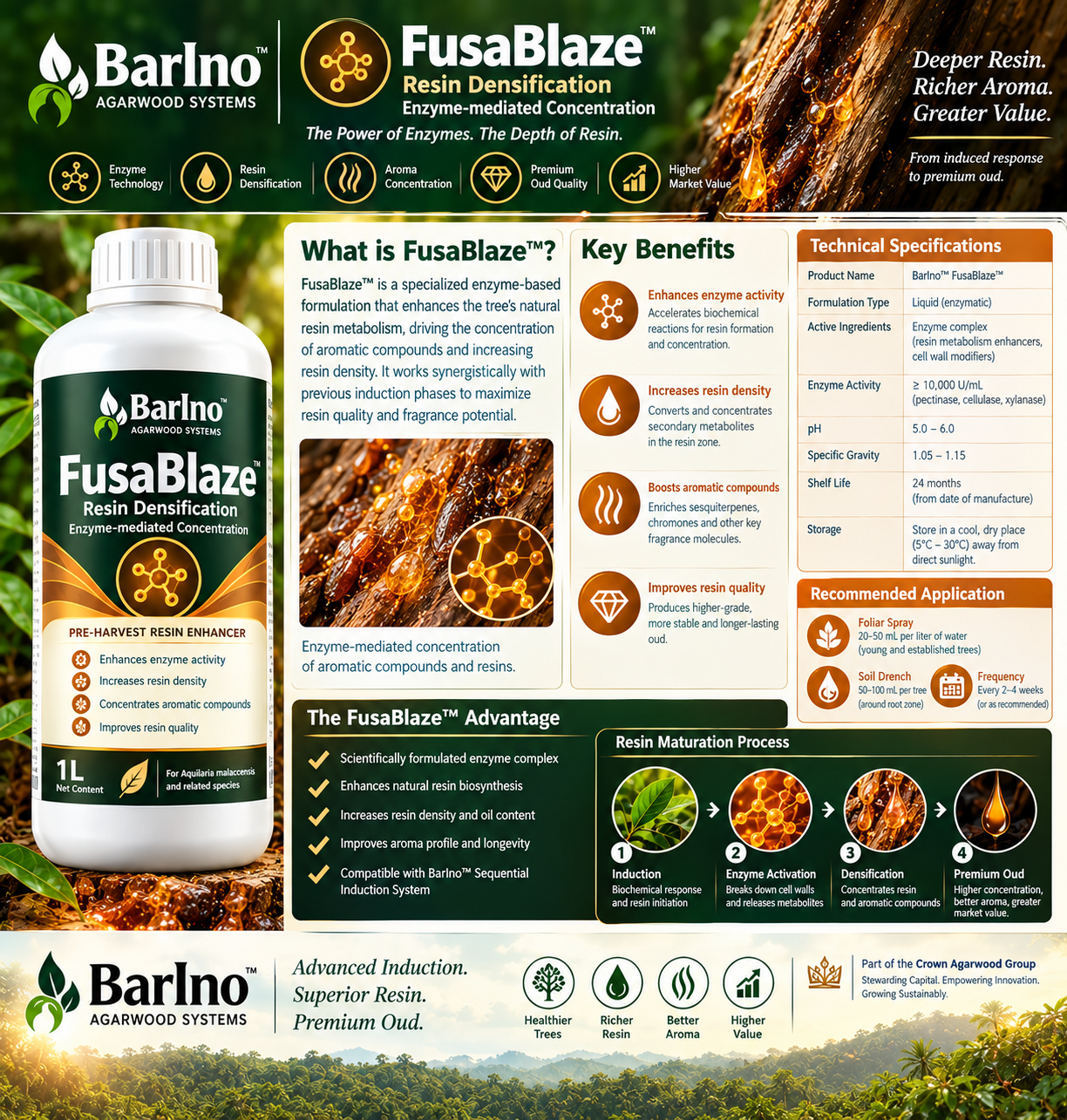
FusaBlaze™ is designed to accelerate and optimize resin formation in Aquilaria species using a synergistic blend of microbial strains and enzyme catalysts. Unlike traditional fungal inoculants that rely solely on Fusarium spp., this formulation integrates enzymatic triggers to induce rapid terpene biosynthesis and controlled resin deposition.

Mechanism of Action

  1. Microbial Activation:
    • Contains selected Fusarium oxysporum strains and other beneficial fungi/bacteria.
    • Microbes colonize the xylem and phloem tissues of Aquilaria, creating a biotic stress response.
  2. Enzyme Induction:
    • Enzyme blend (cellulases, ligninases, peroxidases) degrades specific cell wall components, releasing precursors for sesquiterpene and chromone synthesis.
    • Controlled enzymatic stress mimics natural wounding, triggering resin biosynthesis pathways.
  3. Synergistic Dual Activation:
    • Biotic (microbial) + Abiotic (enzymatic) stresses work in tandem to maximize resin yield.
    • Promotes uniform resin formation throughout the trunk and main branches.

Formulation Highlights

  • Microbial Components: Fusarium oxysporum (inducer strain), Trichoderma spp., Bacillus subtilis.
  • Enzyme Components: Ligninase, cellulase, peroxidase, esterase.
  • Adjuvants: Natural humectants for better adhesion and nutrient support.
  • Stability: Shelf-stable liquid concentrate; room-temperature storage (12–25°C).
  • Application Form: Liquid inoculant for trunk drilling, stem injection, or wounding site application.

Advantages Over Conventional Inoculants

Feature BarIno™ FusaBlaze™ Standard Fusarium Inoculants
Resin Induction Speed Accelerated (resin visible in 4–6 months) Slower (6–12 months)
Resin Distribution Uniform across trunk & main branches Localized, near wound sites
Biotic + Abiotic Trigger Yes No
Microbial Diversity Multi-strain synergistic Single Fusarium strain
Field Predictability High Moderate
Sustainability Eco-friendly, reduced chemical use Minimal sustainability focus

BarIno™ FusaBlaze™ is an advanced dual-action agarwood inoculant engineered to accelerate and enhance resin formation in Aquilaria species through a synergistic fusion of microbial biotechnology and enzymatic activation.

Developed under the BarIno™ platform of Crown MycoResin Biotech, Inc., FusaBlaze™ represents a next-generation solution that goes beyond conventional fungal inoculants by integrating targeted microbial strains with catalytic enzymes to stimulate rapid, uniform, and high-quality resin biosynthesis.

Key Innovation

FusaBlaze™ leverages a Microbe–Enzyme Synergy System:

  • Microbial Induction: Select strains of Fusarium oxysporum, Trichoderma, and beneficial bacteria initiate a controlled biological stress response within the tree.
  • Enzymatic Activation: Specialized enzymes (ligninase, cellulase, peroxidase, esterase) break down structural polymers, releasing biochemical precursors essential for resin production.
  • Signal Amplification: The combined effect enhances terpene and chromone synthesis pathways, resulting in faster and more consistent agarwood formation.

Available on backorder

Description

Field Application Guide

Microbial Enzyme-Based Agarwood Inducant

1. Recommended Trees

  • Species: Aquilaria malaccensis
  • Age: ≥3 years old
  • Diameter at Breast Height (DBH): ≥10 cm
  • Health: Healthy, structurally sound trees without major infections

2. Site Preparation

  • Clear debris around the base and trunk.
  • Ensure good drainage and avoid waterlogged areas.
  • Map inoculation points along the trunk and main branches

3. Wounding / Drilling

  • Hole Diameter: 10–15 mm
  • Depth: 3–5 cm into xylem
  • Angle: Slightly upward (~45°) to prevent water accumulation
  • Spacing: Every 30–50 cm along the trunk depending on DBH
  • Sanitation: Sterilize drill bits or knives before each tree to prevent contamination

4. Inoculant Preparation

  • Dilution: 1:10 with sterile or clean water (adjust according to TDS)
  • Mixing: Gently invert; avoid shaking that could damage microbial cells
  • Storage: Keep shaded and cool; use immediately after preparation

5. Application

  1. Injection:
    • Use sterilized syringes, injector bottles, or pipettes.
    • Deliver 5–10 mL per wound.
  2. Optional Sealing:
    • Apply organic sealant (beeswax or biodegradable paste) to retain inoculant and prevent contamination.
  3. Record-Keeping:
    • Log tree ID, DBH, wound locations, inoculant batch number, and application date.

6. Post-Application Care

  • Monitor for contamination or pest attacks.
  • Maintain optimal soil moisture (avoid overwatering or drought stress).
  • Optional follow-up application at 2–3 months if initial resin induction is low.

7. Observation & Resin Harvest

  • First Signs of Resin: 4–6 months post-inoculation
  • Full Resin Formation: 6–8 months depending on tree age and environment
  • Harvesting:
    • Collect resinous chips carefully to avoid damaging the tree.
    • Maintain traceability for quality control and export compliance.

8. Safety Guidelines

  • Wear gloves, long sleeves, and eye protection.
  • Avoid direct inhalation or ingestion.
  • Clean and disinfect all equipment after use.

9. Optional Enhancements

  • Sequential Induction Protocol: Use with BarIno™ Sequential System for mature trees to maximize yield.
  • Supportive Care: Organic foliar sprays or soil probiotics to enhance overall tree health and metabolism.